7 ‘No No’s’ To Avoid In Your Next Job Interview
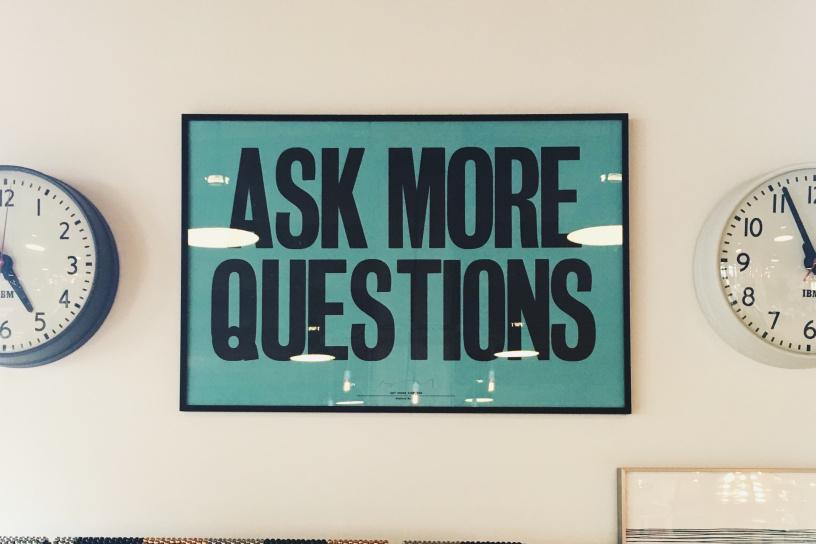
Now, as we all know, there are 101 ways to unintentionally screw up an interview, and unfortunately we only get one chance to make a good first impression. We have compiled a list of 7 things to avoid doing – hopefully this list will equip you for any future interviews you have, and, as always, we wish you the very best of luck!
#1 Failure to do proper research
You may think you’re passed the days of revising, but if so, you’re sadly mistaken. If you haven’t done adequate research, then you simply don’t deserve the job. The key is to know more than you would be expected to – about the company (its products, services, competitors etc.), the role you’re interviewing for, and your interviewer(s). In this day and age, there is no excuse to have not done your homework, Google has all the answers you need, it just may take a little time to find those extra bits of information that will set you apart. The main aim is to be able to answer questions in the interview as confidently as possible, and this will only happen if you have tonnes of knowledge in that head of yours.
#2 Rambling, mumbling or silence
One sure fire way to get the interviewer to stop listening to you is if you go off on a long (and pointless) tangent. Keep your answers short and concise, if what you’re saying doesn’t add anything to the conversation, then don’t waste your breath. This being said, not saying enough is probably worse than saying too much. Don’t forget that an interview is a conversation! Conversations, as we all know, should bounce between you and whoever you’re speaking to – an interview is no different. Therefore, if you give short blunt answers, the conversation will most likely be rather awkward as well as giving the interviewer the impression that you lack the social skills to hold a conversation.
Mumbling is also massively undesirable and avoid it like the plague – the interviewer will have no idea what you’re saying, and will probably switch off. It may well be that mumbling is a consequence of being nervous, but try your best to speak clearly and confidently. If need be, take a deep breath after each question to organise your thoughts, and remember that the interview won’t go on forever.
#3 Being full of yourself
An interview is your opportunity to sell yourself and convince the interviewer that you would be a perfect addition to their company, you don’t, however, want to be egotistical. Don’t brag or make outrageous claims, be truthful and articulate your strong points as well as potential weaknesses, because it is likely you will be asked about these too – if you believe you don’t have any weaknesses, you’re probably lying to yourself and the interviewer (you’re only human, not a metahuman after all).
Badmouthing past employers is massive red flag for the interviewer, and makes you look bitter. If you’re bitching about past bosses, what makes the interviewer think you wouldn’t do the same about them. No one wants to hire an angry person because they are not fun people to work with, and tend to be hard to manage. Save the rants for your friends.
#4 Lying
It is pretty difficult to keep up a web of lies, and you can easily be caught out if what you put on your CV and what comes out of your mouth is different – lies will always be discovered, so do yourself a favour and just be honest. As well as qualifications, if you don’t know the answer to a question, be upfront about it. If you try and guess or make something up, you might as well have a glowing ‘liar’ sign on your forehead. Remember they are your prospective employer, so if you say you have excellent excel skills, it will be very apparent if you have no idea how to use it when you’re asked to.
#5 Not asking questions
Remember, interviews are meant to be a conversation, not a one-sided Q&A. Failing to ask questions makes you appear uninterested. You are not just there to answer the interviewer’s questions and then leave, it is your chance to assess the organisation to see if it would actually be the position for you. If you’re properly listening, and are interested in what you’re talking about, questions should come easily and naturally; though, if you’re at a loss, ask questions about your day to day activities, who you’ll be dealing with, what the organisations goals for you are, etc.
#6 Poor body language
As with any social interaction, if someone looks uninterested, you will probably want the conversation to be over with asap. In an interview situation, you are understandably nervous, but things like avoiding eye contact, fiddling, touching your hair should be avoided. Moving your hands a lot can be extremely distracting, and avoiding eye contact shows the interviewer that you’re intimidated, and can give the impression that you’re not engaged or listening. This being said, staring at them is just weird and borderline creepy, so find a happy medium.
Bad posture is one of the best ways to look uninterested, so it’s best to avoid that at all costs – lucky for you, it is very easy to sit up straight. Lastly, floppy (fish-like) handshakes are terrible and everyone hates them. Offering a weak handshake can be very awkward and starts the interview on an uncomfortable note. Similar to eye contact, there is such a thing as too much and too little – a handshake is not a strong man competition and you don’t want to break your prospective employers hand.
#7 Be late
Always arrive at least 10 minutes early. If you’re late, you may be written off before you have a chance to sell yourself. Punctuality is easy and key, it takes no talent or skill to be on time. If you envisage being late to your interview because of travel disruptions or other unavoidable circumstances, call your recruiter as early as possible to give a heads up and they will alert the interviewers.
Now, if you’re in the process of finding a new career and are interested in a role in recruitment, get in touch with us here at 5Q Consultancy for more expert guidance. Contact one of our Consultants on 0203 700 8483, or email info@5-q.co.uk.